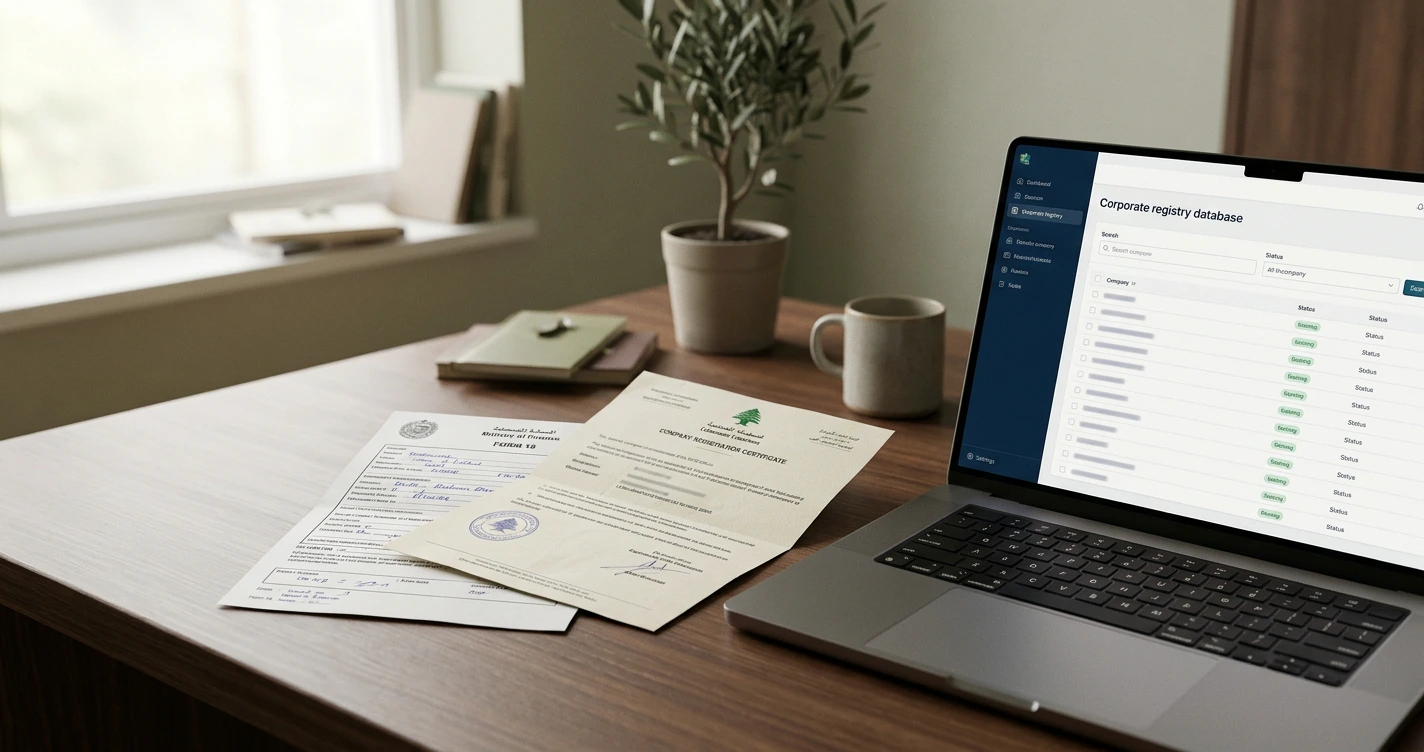
Key takeaways
- To dissolve a company in Lebanon you need a shareholder resolution (or court order), a formal liquidation, and final deregistration with the Commercial Registry.
- The Lebanese Code of Commerce sets a clear sequence: pass a dissolution resolution, appoint a liquidator, settle debts and distribute any surplus, then strike the company off the register.
- Lebanon ranked 151st of 190 economies for resolving insolvency, with a 30.8 cents-on-the-dollar recovery rate (World Bank Doing Business 2020).
- Directors and liquidators can be held personally liable if they mishandle creditors, taxes, or employee entitlements during winding-up.
- Company books must be kept for 10 years after the company is struck off the register.
To dissolve a company in Lebanon you follow three stages: pass a formal decision to end the company, run a supervised liquidation, then deregister with the Commercial Registry. Each stage has rules under the Lebanese Code of Commerce, and skipping any of them can leave directors personally exposed. This guide walks through the grounds for dissolution, the liquidation procedure, how to settle debts, taxes and staff entitlements, and the mistakes that cause problems during winding-up.
Closing a business is rarely a single signature. It is an orderly process that protects creditors, employees, and the shareholders themselves. Done properly, company liquidation in Lebanon ends the entity cleanly and shields its officers from future claims.
What Are the Grounds for Dissolving a Company in Lebanon?
A company in Lebanon can be dissolved voluntarily by its shareholders or judicially by court order. The Code of Commerce recognises several grounds: the expiry of the company's fixed term, completion or failure of its stated purpose, a provision in the bylaws, a resolution by the shareholders, or the loss of a large portion of the share capital.
Voluntary dissolution is the common route. For a joint stock company, shareholders usually act through an extraordinary general assembly, which requires a reinforced quorum and majority to approve ending the company. This is a deliberate decision, often taken when owners want to exit, merge, or stop trading.
Judicial dissolution is different. If the board fails to call the required assembly after the company loses a substantial part of its capital, a shareholder can petition the court to either dissolve the company or order corrective steps. Courts may also dissolve a company in disputes, deadlock, or serious breaches.

What Is the Liquidation Procedure Under Lebanese Law?
Liquidation in Lebanon runs in three clear phases. First, the general assembly passes the dissolution resolution and appoints a liquidator. Second, the liquidator carries out the winding-up: collecting assets, paying creditors, and closing accounts. Third, an ordinary general assembly confirms the liquidation and releases the liquidator from liability.
The liquidator is central to the whole process. The company's bylaws may name one in advance. If not, the general assembly appoints the liquidator, and if the assembly fails to act, the court steps in. Once appointed, the liquidator replaces the directors for the purpose of closing the business and acts in the interest of creditors and shareholders.
Throughout liquidation, the company's statutory auditors stay in office and supervise the liquidator's work. If the liquidation runs longer than a year, the liquidator must prepare an annual balance sheet. At the end, a final balance sheet shows what each shareholder receives after all debts are cleared. The dissolution decision must also be published so third parties are on notice that the company is closing.
Different structures can involve extra steps. A holding company, for example, may have cross-border assets or subsidiaries to unwind first, which shapes how the later wind-down is sequenced.
Our observation: The single biggest delay we see is appointing a liquidator who is not independent enough. When a departing shareholder or an active director takes the role, creditors and co-owners challenge the accounts, and the "release from liability" assembly stalls for months.
How Do You Settle Debts, Taxes, and Employee Entitlements?
The liquidator must pay the company's obligations before any money reaches shareholders. That order matters. Creditors and employees rank ahead of owners, and distributing a surplus before debts are cleared is one of the fastest ways to trigger personal liability.
Settling obligations covers three buckets. Commercial debts to suppliers, lenders, and landlords must be identified and paid or formally settled. Tax obligations, including corporate income tax, VAT where applicable, and any outstanding social security contributions, must be cleared, and tax authorities will expect clean final returns before closure. Employee entitlements, such as end-of-service indemnities, unpaid wages, and notice, must be honoured under Lebanese labour rules.
This is also where the economics of closure show up. Lebanon ranked 151st out of 190 economies for resolving insolvency, with a recovery rate of only 30.8 cents on the dollar and an average process of 3.0 years (World Bank, Doing Business 2020, 2020). Those figures predate the 2020 financial crisis and the project was later discontinued, but they signal a hard truth: a messy wind-down in Lebanon is slow and returns little to stakeholders. A planned, well-documented liquidation avoids that fate.
If a bank is involved as a creditor or is holding frozen funds, the settlement can get complicated. Our guide to banking disputes and depositor rights in Lebanon is a useful companion when liquidation runs into blocked accounts.
How Do You Deregister With the Commercial Registry?
Deregistration is the final legal step that ends the company's existence. After the liquidator completes the winding-up and the ordinary general assembly approves the final accounts, the company applies to be struck off the Commercial Registry held under the Ministry of Justice.
The filing package typically includes the dissolution resolution, the liquidator's appointment, proof that the dissolution was published, the final liquidation balance sheet, and evidence that tax and other clearances are in order. The registry then removes the company and issues a certificate evidencing deregistration. That certificate is your proof the entity no longer exists.
A practical note for 2026: the online Commercial Registry portal has been unreliable, so many filings are still handled in person at the competent registry. Build in extra time for that, and keep certified copies of everything you submit. Even after closure, the law requires the company's books and records to be kept for 10 years, so assign someone to hold the archive safely.
What Are the Common Pitfalls and Director Liability Risks?
The main risk in winding-up is personal liability for directors and liquidators who cut corners. Paying shareholders before creditors, hiding assets, filing inaccurate accounts, or ignoring employee claims can convert a company debt into a personal one for the people running the closure.
Lebanese law has tightened on this point. A 2019 reform of the Code of Commerce broadened the circle of people who can be held responsible in bankruptcy situations, reaching beyond named directors to the general manager and others who effectively control the company. In practice, that means a hands-on shareholder or shadow director cannot hide behind a title during a failed or dishonest wind-down.
Common pitfalls we flag for clients include starting liquidation without appointing a proper liquidator, failing to publish the dissolution, distributing a surplus too early, and leaving tax or social security balances unsettled. Each of these can reopen a "closed" company or expose its officers years later. Strong records and clean governance throughout the process are the best defence, and our guide to corporate governance best practices in Lebanon sets out the habits that make a wind-down defensible.
At Phoenix Law Firm, we manage dissolutions end to end: drafting the shareholder resolutions, acting as or advising the liquidator, clearing tax and labour obligations, and handling the Commercial Registry deregistration. If you are weighing closure, a short planning session early can save months and reduce personal exposure.
Frequently Asked Questions
How long does it take to dissolve a company in Lebanon?
A clean voluntary liquidation can take several months, but a contested or insolvent one is far slower. World Bank data put Lebanon's average time to resolve insolvency at 3.0 years before the project was discontinued. Good documentation and an independent liquidator are the biggest levers on speed.
What is the difference between dissolution and liquidation?
Dissolution is the decision to end the company, taken by shareholders or a court. Liquidation is the process that follows: collecting assets, paying creditors, and distributing any surplus. A company is only fully closed once liquidation finishes and it is struck off the Commercial Registry.
Do I need to settle all debts before closing?
Yes. The liquidator must pay creditors, taxes, and employee entitlements before any money goes to shareholders. Distributing a surplus before debts are cleared is a leading cause of personal liability for directors and liquidators under Lebanese law.
Can a company be dissolved against the shareholders' wishes?
Yes. A court can order judicial dissolution, for example after a major capital loss when the board fails to act, or in cases of deadlock, fraud, or serious breach. Any shareholder with standing may petition the court for dissolution or corrective measures.
How long must records be kept after closing?
The company's books and documents must be retained for 10 years after it is struck off the Commercial Registry. Assign a responsible person to hold these records, since tax and legal questions can surface well after the entity formally ceases to exist.
Closing a Company the Right Way
If you have decided to wind down, start by listing your creditors, employees, and tax balances before you call the shareholder meeting. That single step tells you whether your closure will be a straightforward voluntary liquidation or a harder, possibly judicial, process, and it shapes who you should appoint as liquidator. Bring that list to a corporate lawyer, confirm your grounds and documents, and run the three stages in order so the company is struck off cleanly and its officers walk away without lingering liability.