Key takeaways
- Lebanon regulates personal data through Law No. 81/2018, which bundles electronic transactions and data protection into one statute rather than a standalone privacy act.
- Businesses generally must file a prior declaration with the Ministry of Economy and Trade and obtain a permit before processing personal data, unless an exemption applies.
- The law is silent on cross-border data transfers and sets no mandatory breach notification duty, leaving major gaps companies must manage through contracts and policy.
- There is no independent data protection authority in Lebanon, and enforcement runs through the courts rather than an administrative regulator.
- Treat compliance as risk management: document consent, secure data, and keep a paper trail even where the regulator has not yet issued detailed procedures.
Data protection law in Lebanon is governed mainly by Law No. 81/2018 on Electronic Transactions and Personal Data, which sets out how businesses may collect, store, and process personal information. For most companies the practical duties are a prior declaration to the Ministry of Economy and Trade, a lawful basis for processing, and reasonable security for the data they hold.
If you run a business in Lebanon and handle customer records, employee files, or marketing lists, this guide explains what the law asks of you, where it stays silent, and how to build a defensible compliance position in a market that still lacks a dedicated regulator.
The legal framework behind data protection law in Lebanon
Lebanon's privacy law sits inside a broader e-transactions statute. Law No. 81/2018 was enacted on 10 October 2018 and published in the Official Gazette on 31 December 2018. Rather than a focused privacy act in the style of the EU's GDPR, it combines rules on electronic signatures, online transactions, cybercrime, and personal data into a single text.
That design choice matters. Personal data provisions share the law with commercial and criminal clauses, so the privacy rules are shorter and less detailed than businesses coming from a European or Gulf compliance background might expect. You can read the official English text of the law, published in the Official Gazette, through the digital rights organization SMEX.
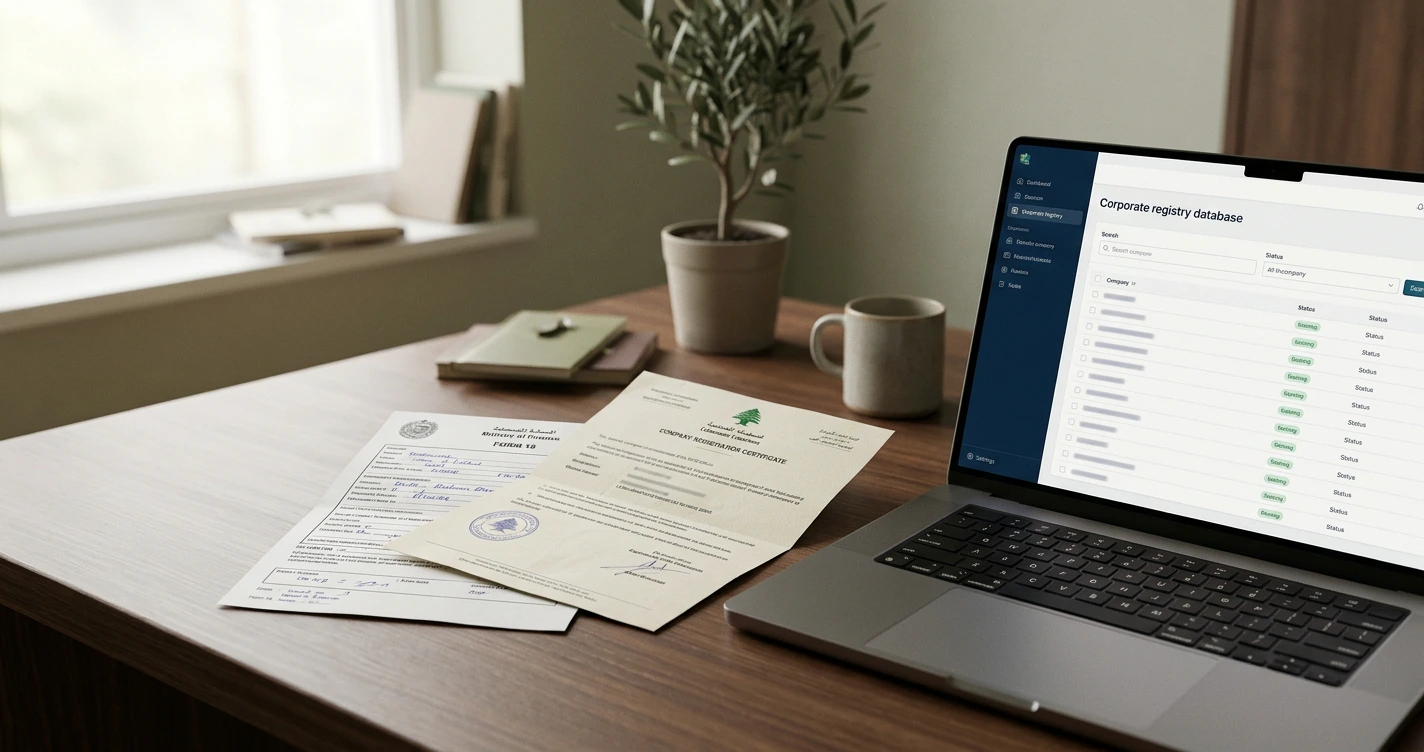
The statute names the Ministry of Economy and Trade as the authority responsible for receiving data processing declarations and issuing permits. It does not create a separate, specialized data protection authority, which shapes how the rules actually work in practice.
What personal data obligations apply to Lebanese businesses
Any business that collects or processes personal data in Lebanon carries three core obligations under Law 81/2018: register the activity, process on a lawful basis, and keep the data secure.
The headline duties for a typical company are:
- Prior declaration. Before processing personal data, a business is generally expected to file a declaration with the Ministry of Economy and Trade.
- Permit requirement. Processing often requires a permit from the Ministry unless an exemption applies, such as processing for personal or household use.
- Lawful basis. Processing should rest on the data subject's prior agreement or a recognized exemption in the law.
- Security measures. Data must be handled securely, with encryption expected for information transmitted over the web.
- Purpose limitation. Personal data should be collected for specified purposes and not used in ways the individual would not expect.
Sensitive categories, including data touching health, criminal records, or national security, attract tighter controls and special licensing. Companies that process personal data at scale should also designate someone accountable for data handling, even though the law's procedural detail here is thin.
Privacy duties rarely sit alone. If you sell online, they overlap with your obligations under the country's wider digital commerce rules, which we cover in our guide to e-commerce law in Lebanon.
Consent, storage, and cross-border data transfer rules
Consent is central to lawful processing, yet Law 81/2018 does not formally define it. The text treats a data subject's advance agreement as a basis for processing, but leaves the mechanics, how consent is captured, recorded, and withdrawn, largely unspecified. For businesses, that ambiguity is a reason to be more rigorous, not less: capture clear, documented consent and keep records of when and how it was given.
Storage and data handling
On storage, the law expects lawful, transparent collection, use limited to stated purposes, and secure retention. It does not impose detailed retention schedules or a data localization mandate, so there is no general requirement to keep Lebanese residents' data physically inside the country. Good practice is to set your own retention periods, delete data you no longer need, and apply access controls and encryption as a baseline.
Cross-border transfers
The most significant gap concerns international transfers. Law 81/2018 is silent on cross-border data transfers. There is no statutory mechanism equivalent to the EU's adequacy decisions or standard contractual clauses, and no explicit prohibition either.
Silence is not safety. If you move customer or employee data to cloud providers, group companies, or processors abroad, build the protection into your contracts: data processing agreements, confidentiality terms, security commitments, and clear allocation of liability. Businesses structured across borders should coordinate these terms with their wider regional arrangements rather than treating each transfer in isolation.
Penalties for non-compliance and enforcement realities
Law 81/2018 does set out sanctions for misuse of information systems and personal data, including fines and, for serious offenses such as fraudulent alteration of data or unauthorized access, potential imprisonment. Because the monetary penalties are denominated in Lebanese pounds and date from 2018, their real-world value has shifted sharply with the currency crisis, so the deterrent weight of the nominal figures is far lower today than when the law passed.
The more important point is structural. Enforcement in Lebanon runs through the courts rather than a dedicated regulator. There is no independent data protection authority, and no administrative enforcement body issuing fines or audits the way a European supervisory authority would. A data subject or prosecutor generally has to go to court to pursue a breach.
Implementation has also lagged. According to the independent Euro-Med Human Rights Monitor, several years after the law's adoption the Ministry of Economy and Trade had still not issued directives explaining how to submit personal data processing requests. You can read that assessment in Euro-Med Monitor's analysis of digital justice in Lebanon.
For businesses, weak enforcement today is not a reason to ignore the law. Rules can be activated, directives can be issued, and reputational and contractual exposure exist regardless of regulator activity. International clients and partners increasingly demand data protection commitments that go well beyond what Lebanese law currently enforces.
A practical compliance checklist for companies handling customer data
Privacy law Lebanon compliance is achievable even in a thin regulatory environment if you focus on documentation and security. Use this checklist as a starting point:
- Map your data. List what personal data you collect, where it lives, who can access it, and how long you keep it.
- Fix a lawful basis. For each processing activity, record whether you rely on consent or an exemption, and document that decision.
- File with the Ministry. Prepare and submit a data processing declaration to the Ministry of Economy and Trade, and keep proof of filing.
- Capture consent properly. Use clear notices and record when and how individuals agreed, especially for marketing and sensitive data.
- Secure the data. Apply access controls, encryption for web transmission, and reasonable technical safeguards.
- Control transfers by contract. Put data processing and confidentiality terms into every vendor and intra-group arrangement that moves data abroad.
- Write a retention and deletion policy. Set defined periods and delete data you no longer need.
- Prepare for incidents. Even without a statutory duty, define an internal breach response plan so you can act fast and demonstrate diligence.
- Review annually. Reassess as your processing changes and as the Ministry issues new directives.
A short, well-documented program will usually put a Lebanese business ahead of the compliance curve. At Phoenix Law Firm, our corporate team helps companies in Beirut translate Law 81/2018 into practical policies, Ministry filings, and vendor contracts that hold up with both local courts and international counterparties.
Frequently asked questions
Is there a single data protection law in Lebanon?
The main instrument is Law No. 81/2018 on Electronic Transactions and Personal Data. It is not a standalone privacy act; personal data rules sit alongside provisions on electronic signatures, online transactions, and cybercrime within the same statute.
Do Lebanese businesses need to register before processing personal data?
Generally yes. The law expects a prior declaration to the Ministry of Economy and Trade and, in many cases, a permit before processing personal data, unless a recognized exemption such as personal or household use applies.
Does Lebanon have a data protection authority?
No. Lebanon does not have an independent data protection authority. The Ministry of Economy and Trade holds the relevant powers on paper, and enforcement of breaches runs through the courts rather than an administrative regulator.
What does the law say about sending data abroad?
Law 81/2018 is silent on cross-border data transfers. There is no statutory transfer mechanism and no explicit ban, so businesses should manage international transfers through contracts, including data processing and confidentiality terms with any processor outside Lebanon.
Is there a breach notification requirement in Lebanon?
The law does not impose a general mandatory breach notification duty on businesses. Even so, maintaining an internal incident response plan is sound practice and helps demonstrate diligence to clients, partners, and courts.